NEWS
PARTNERSHIPS &
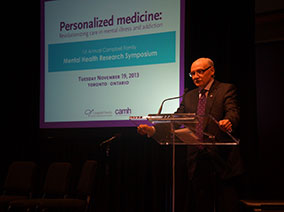
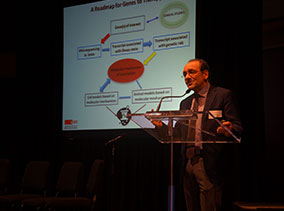
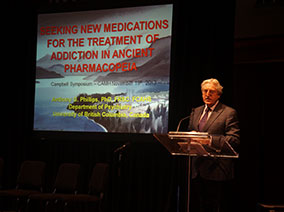
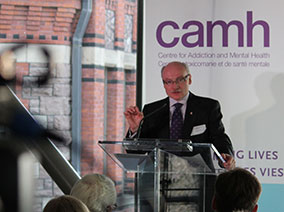
The inaugural Campbell Family Mental Health Research Symposium featured North American thought leaders in mental health research: Dr. Thomas Insel of the U.S. National Institute of Mental Health, Dr. Daniel Weinberger of the Lieber Institute and Dr. Anthony Phillips of the Canadian Institutes of Health Research. CAMH scientists presented on topics such as epigenetic drugs as treatment for mental illness, and treatment biomarkers for brain stimulation in depression, among others.
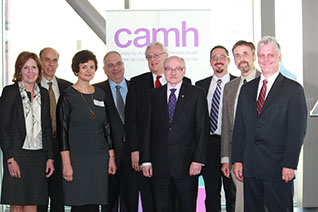
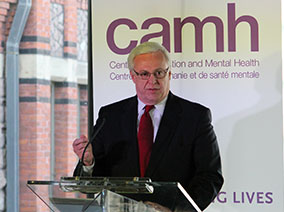
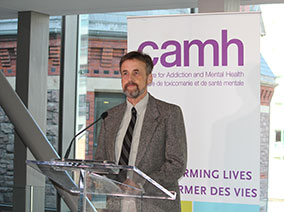
CAMH announced a partnership with U.S. biotechnology company Assurex Health to advance the use of personalized medicine— genetic testing to determine a person’s response to psychiatric medications, avoiding treatment failure and side-effects. AssureRx Canada was established as a subsidiary of the U.S. company, with its Canadian office and laboratory on CAMH premises.
As part of CAMH’s role as a World Health Organization Collaborating Centre, Dr. Jürgen Rehm and his team contributed to the 2014 Global Status Report on Alcohol and Health. The WHO report provides a snapshot of alcohol consumption and the impact of public health and policy responses in 194 member states.
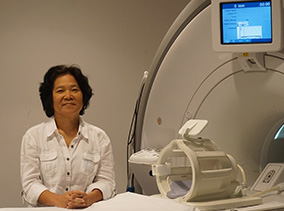
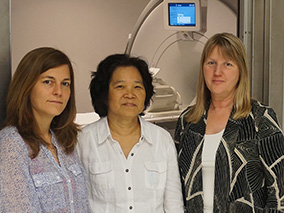
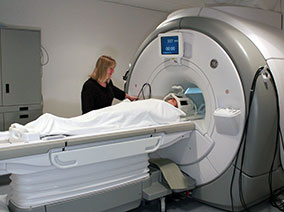
Dr. Napapon Sailasuta, an expert in developing magnetic resonance spectroscopy (MRS) techniques, has been recruited to CAMH’s Research Imaging Centre from Huntington Medical Research Institutes in California. Her expertise will expand MRI capabilities at CAMH. MRS provides biochemical information about brain tissues and chemical processes.
Seven U.S. patents were issued for CAMH inventions in the past year. The patents were related to treatments for depression, addiction, schizophrenia, and stroke or epilepsy; for genetic mutations to screen for muscular myopathy and Joubert syndrome; and for a method to diagnose mood disorders. In addition, two other discoveries were licensed to AssureRx Canada, for genetic markers predicting suicide risk and antipsychotic-induced weight gain.
Dr. Paul Kurdyak is leading the new Mental Health and Addictions Research Program at the Institute for Clinical Evaluative Sciences (ICES), aimed at improving inequities in mental health and addiction service delivery in Ontario.
AWARDS
& HIGHLIGHTS
EXECUTIVE
COMMITTEE
CAMH RESEARCH



IN TOUCH
WITH CAMH RESEARCH

Download your copy of this years' Research Annual Report as a PDF


FIRST CAMPBELL FAMILY
RESEARCH SYMPOSIUM
FIRST CAMPBELL FAMILY
RESEARCH SYMPOSIUM
FIRST CAMPBELL FAMILY
RESEARCH SYMPOSIUM
<
>
ADVANCING PERSONALIZED MEDICINE
ADVANCING PERSONALIZED MEDICINE
ADVANCING PERSONALIZED MEDICINE
ADVANCING PERSONALIZED MEDICINE
<
>


GLOBAL REPORT
ON ALCOHOL
GLOBAL REPORT
ON ALCOHOL
<
>
NEW BRAIN IMAGING
CAPABILITIES
NEW BRAIN IMAGING
CAPABILITIES
NEW BRAIN IMAGING
CAPABILITIES
<
>

COMMERCIALIZATION
UPDATE
COMMERCIALIZATION
UPDATE
<
>
IMPROVING
SERVICE DELIVERY
IMPROVING
SERVICE DELIVERY
<
>
KEEP
SPOTLIGHT on
CAMH Young
Investigators
2014 Vanier Canada Graduate Scholarship
2014 U.S. Brain &
Behavior Research Foundation NARSAD Young Investigator Grants
Dr. Anne Bassett
JOHN DEWAN PRIZE
Ontario Mental Health Foundation
Dr. Jeff Daskalakis
DR. SAMARTHJI LAL AWARD
Graham Boeckh Foundation
Dr. Vincenzo De Luca
ALEXANDER GRALNICK AWARD
FOR SCHIZOPHRENIA RESEARCH
American Psychiatric Foundation
Dr. Christian Hendershot
PETER LOUGHEED / CIHR NEW INVESTIGATOR SALARY AWARD
Canadian Institutes of Health Research
Dr. James Kennedy
NARSAD DISTINGUISHED INVESTIGATOR
Brain & Behavior Research Foundation
Dr. Romina Mizrahi
NARSAD
INDEPENDENT INVESTIGATOR
Brain & Behavior Research Foundation
Dr. Bruce G. Pollock
WILLIAM B. ABRAMS AWARD IN GERIATRIC CLINICAL PHARMACOLOGY
American Society for Clinical Pharmacology and Therapeutics
Dr. Jürgen Rehm
HIGHLY CITED RESEARCHER, 2002–2012
Thomson Reuters
Dr. Aristotle Voineskos
NARSAD
INDEPENDENT INVESTIGATOR
Brain & Behavior Research Foundation
Dr. David Wolfe
UNESCO CHAIR AWARD
United Nations Educational, Scientific and Cultural Organization
SPOTLIGHT on
CAMH Young Investigators
2014 Vanier Canada Graduate Scholarship
Daniel Felsky, PhD student
2014 U.S. Brain & Behavior Research Foundation NARSAD Young Investigator Grants
Dr. Faranak Farzan
Dr. Colin Hawco
Dr. Sanjeev Kumar
Dr. Shraddha Pai

Visit us at
www.camh.ca/research
Subscribe
to our e-newsletter,
CAMH Discovers

Watch
research videos on the CAMH YouTube channel
Follow
@CAMHResearch on Twitter


Search for studies
in Find a CAMH Study


At CAMH, we describe our research on mental illness and addiction according to three pillars:
Each pillar addresses an important aspect of mental illness and addiction. A better understanding of brain structure and function can help reveal causes of illness and new targets for treatments. By conducting innovative clinical research, we can positively impact care. In identifying the complex social factors that contribute to illnesses, we can inform system-level interventions and public policy.



For an individual with an illness, the research undertaken in each pillar is relevant throughout their lives. The roots of illness may begin even before birth. Experiences during infancy and childhood can influence the development of mental health and substance use problems later. Symptoms can be treated and recur later in different ways. Some mental illnesses can emerge late in life. For this reason, scientists are increasingly working across these pillars, and combining their scientific expertise, to better understand these complex, chronic conditions. This year, we show how the contributions from each pillar provide pieces of evidence about mental illnesses and addictions across the lifespan.

Brain
science
Clinical
research
Social &
epidemiological

Discovery across the lifespan
2013–2014 CAMH Research Annual Report






See how our research is helping to transform lives across the lifespan

Our discoveries and innovations
will lead to a better quality of life for the people
and communities we serve, and beyond.

Transforming Lives Through Research
VICE PRESIDENT
OF RESEARCH
LETTER FROM THE
CAMH continues to transform the way that mental illness and addictions are understood and treated. Research is a crucial part of this charge.
Over the past year, we have moved forward in a number of directions through external partnerships and internal initiatives.
We have established partnerships with the U.S. biotechnology company Assurex Health to advance personalized medicine, and with the Institute for Clinical Evaluative Sciences (ICES) to improve mental health and addiction services across the province.
Within CAMH, we continue to build upon our scientific expertise. We have recruited two international experts—our inaugural Campbell Family Chair in Clinical Neuroscience, who is an expert in depression and aging, and a specialist in magnetic resonance spectroscopy techniques to expand our brain imaging capabilities. You can learn more about their work within this report.
We continue to work with our Toronto hospital colleagues to develop a cross-organizational approach on research and treatment for women, and for children and youth. CAMH’s new chief of General Psychiatry holds a joint appointment with Women’s College Hospital, bringing greater focus at CAMH to trauma-informed research on women. This follows the joint appointment, last year, of the new chief of the Child and Youth Mental Health Collaborative at CAMH, the Hospital for Sick Children and the University of Toronto.
Finally, it is worth noting the important work that occurs behind the scenes. We have undertaken major initiatives to improve research quality and compliance, to develop a new bioinformatics strategy and to advance our commercialization activities. This work is essential in supporting our ongoing success, which is reflected in the stories presented in this year’s report.
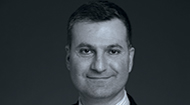
Bruce G. Pollock, MD, PhD, FRCPC
Vice President, Research
Director, Campbell Family Mental Health Research Institute



2013–2014 Research Annual Report