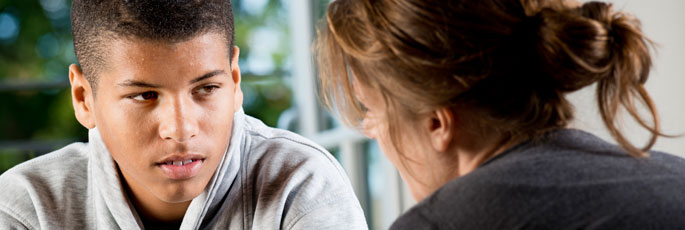
When 19-year-old Chelsea Leger-Watt first came to CAMH, she thought finishing high school—never mind university— was far out of reach for her.
"I was really suicidal. I was really depressed," recalls Chelsea, who came to CAMH through the Gerald Sheff & Shanitha Kachan Emergency Department. "I just felt like I was different than other people. I couldn’t deal with things properly. Things would consume me; one thing would happen and it would just consume my life. I would be bedridden. I couldn’t deal with my emotions properly. I was angry, sad. I had really bad relationships."
Fortunately, Chelsea eventually landed in CAMH’s REACH (Recovery and Education for Adolescents Choosing Health) Program, a day treatment program that is part of CAMH’s Child, Youth and Family Service. Through REACH, young people 14 to 21 years old can earn high school credits while participating in treatment for mental illness and/or addictions.
Classrooms are small, with no more than eight students per class. The students work closely with CAMH staff to manage their mental illness and substance dependence, as well as the often painful journey of adolescence.
For teens like Chelsea, REACH represents a turning point. Through the program, young people work with teachers, social workers and other CAMH staff.
"At CAMH we say that everybody here is a teacher and everybody here is a student," says Raju Bains, manager of CAMH’s Youth Addictions and Concurrent Disorders Service. "This is what the REACH classroom exemplifies every day. There certainly have been some days when students have taught us, and other days where we might have taught them a thing or two, but we’re always learning from each other."
Having finished the REACH program, Chelsea is focusing her attention on her future, her ambitions high, and has even started university.
"Eventually I want to get my PhD in psychology, but first I’m going to do a major in mental health studies with a double minor in linguistics and environmental sciences."