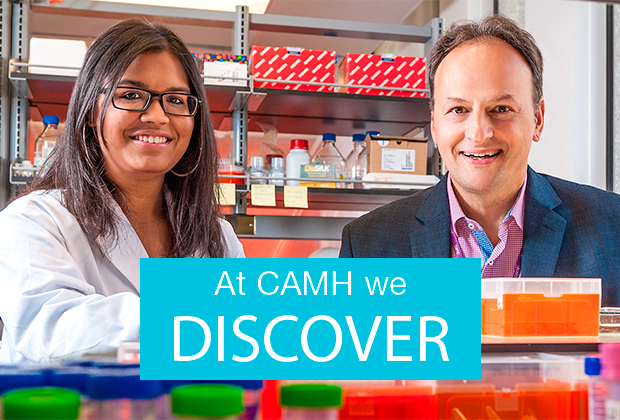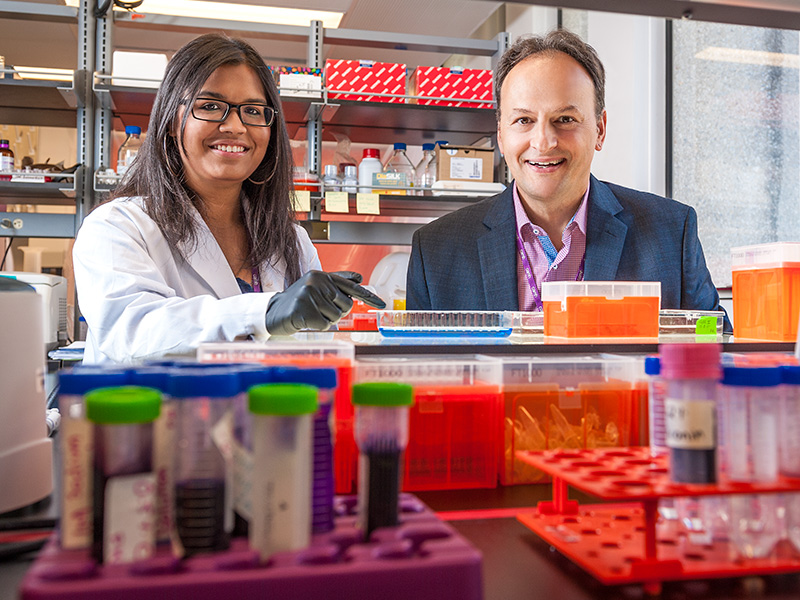
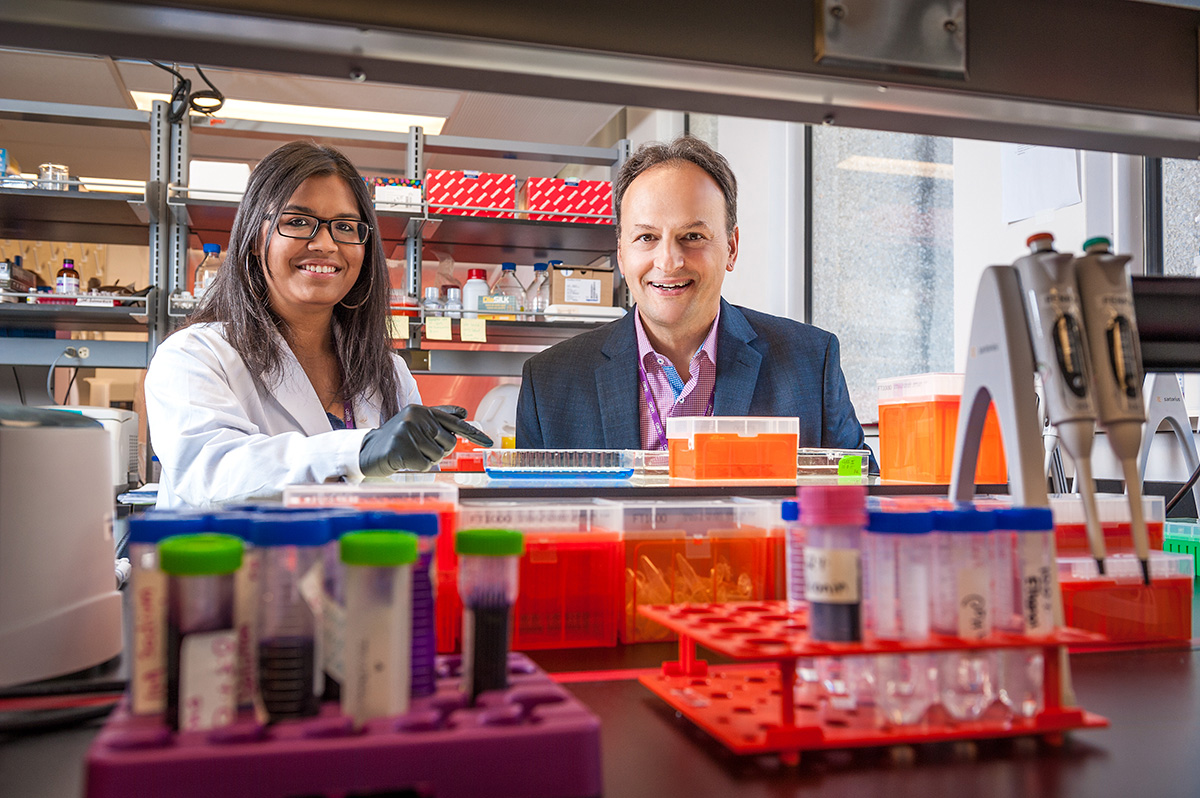
Master’s student Fenika Kapadia with Dr. Etienne Sibille, Campbell Family Chair in Clinical Neuroscience.


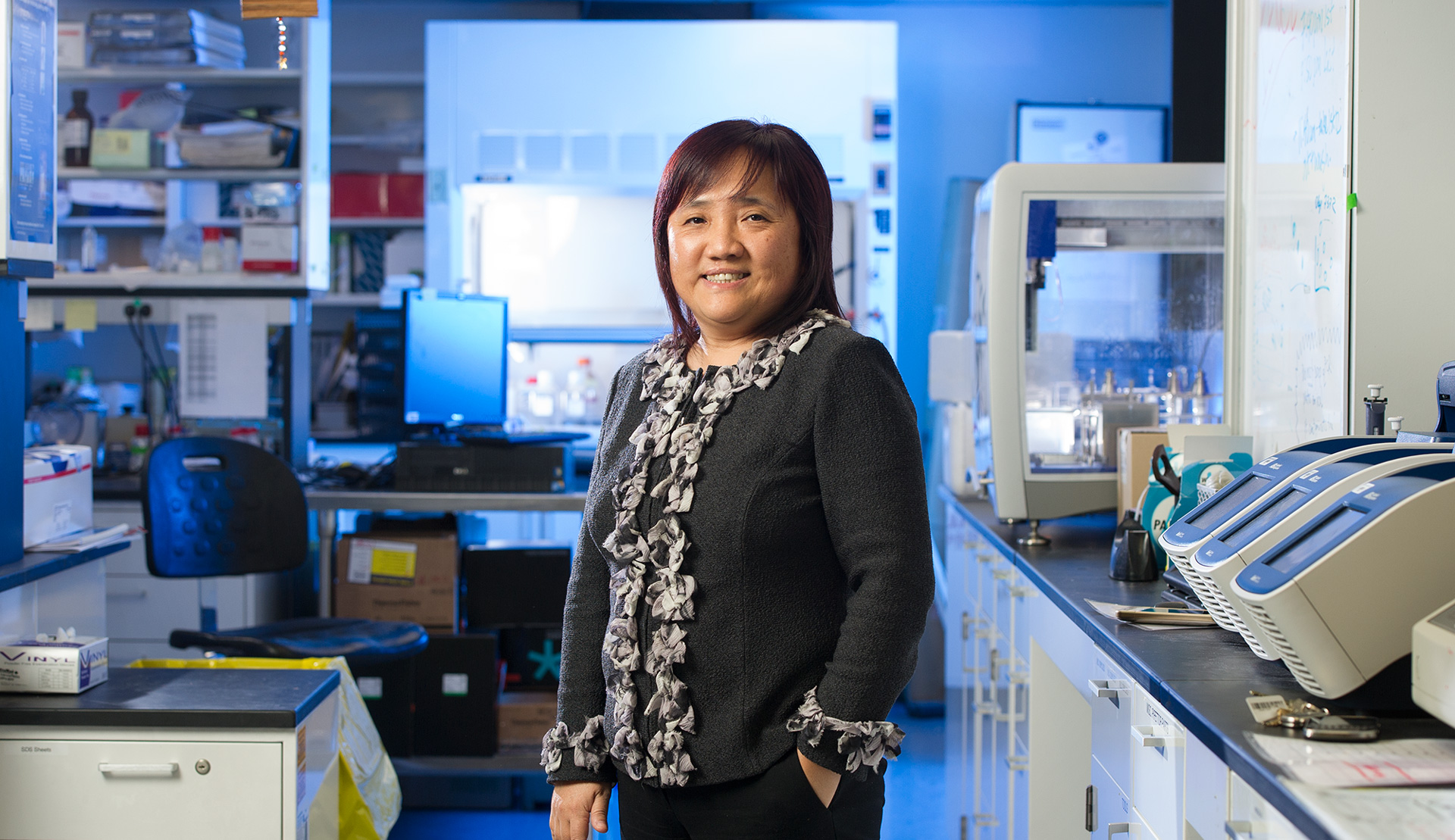




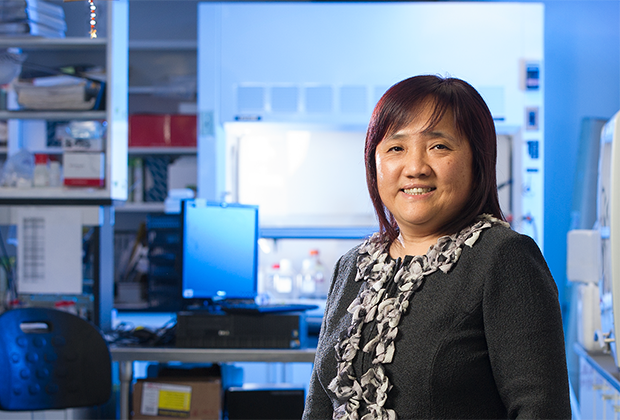
Dr. Fang Liu, Head of Molecular Neuroscience.
“We’re working on ways to manage the vast amounts of data generated by research through a bioinformatics or 'big data' plan,” explains Dr. Bruce Pollock, Director of the Campbell Family Mental Health Research Institute and Vice-President of Research at CAMH. This is a new frontier in mental health research, and it’s helping researchers understand the molecular mechanisms behind psychiatric illnesses.
New approach to depression
CAMH will advance a new approach effective in treating depression through a new licensing agreement.
A peptide developed by Dr. Fang Liu and her team shows promise in treating depression and other disorders, and is delivered through a nasal spray developed by Impel NeuroPharma. The agreement enables further research as the treatment is developed.
“This peptide is an entirely new approach to treating depression, and our work with Impel NeuroPharma has demonstrated a safe and effective way to provide this treatment in our research to date,” says Dr. Liu, Head of Molecular Neuroscience in the Campbell Family Mental Health Research Institute. “We’re excited that this licensing agreement brings us one step closer to clinical trials.”
“We are mining data, understanding it and learning lessons from it,” says Dr. Etienne Sibille, the inaugural holder of CAMH’s Campbell Family Chair in Clinical Neuroscience.
Working with researchers in the U.S., Dr. Sibille used the power of big data to analyze thousands of genes from nearly 150 brains to determine that aging results in changes to day-night rhythms that could explain the changes in sleep patterns, cognition and mood seen in aging.

We are mining data, understanding it and learning lessons from it."

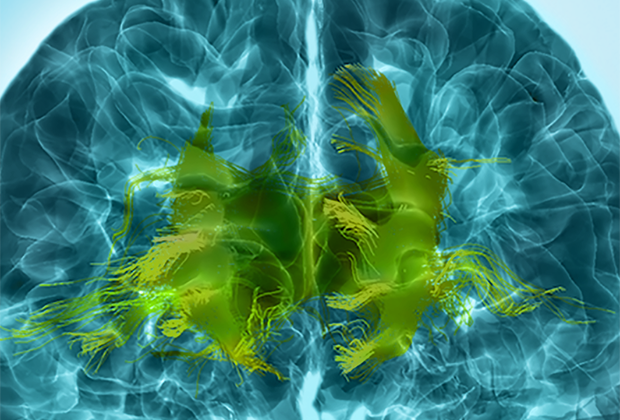
Big data is also key to an international research project focusing on the most challenging aspects of schizophrenia. The study is led by Dr. Aristotle Voineskos, head of the Kimel Family Translational Imaging-Genetics Laboratory. The ambitious five-year study combines brain scans and genetic information to identify and map genes associated with social impairments in schizophrenia.
“There are many millions of variables on each person,” says Dr. Voineskos, noting that bioinformatics will allow his team to extract meaning from large datasets faster than has ever been possible before.