
Young people playing basketball in the Sandi and Jim Treliving Gymnasium as part of their overall recovery from mental illness.
In Canada today, more than a million young people live with mental illness. Without timely, specialized care, many of these young people will encounter a lifelong path of disability. CAMH’s Child, Youth and Emerging Adult centres of innovation are delivering life-saving care and conducting groundbreaking research to transform the lives of young people living with mental illness.
The Slaight Family Centre for Youth in Transition is dedicated to understanding and treating severe mental illness in youth from the late teens through early adulthood. The Slaight Centre integrates research and clinical care to advance new approaches for early intervention and recovery for young people experiencing psychosis.

“We expect to see better outcomes for youth, including improved functioning, decreased symptoms and better satisfaction with the services.”
— Dr. Joanna Henderson, Director of the McCain Centre
To this end, the Centre has developed standardized Integrated Care Pathways — evidence-based models of care to improve treatment and outcomes of the patients they serve. The Centre has also reduced wait times dramatically — 75 per cent over the last year. Patient files are reviewed by the Slaight Centre intake team in 48 hours, and patients are seen by a psychiatrist in one week.
“Structured, standardized care works best the earlier it is applied for people experiencing psychosis,” says Dr. Aristotle Voineskos, Director of the Slaight Centre. “How quickly you see a patient is a key part of how well we deliver care.”
The Margaret and Wallace McCain Centre for Child, Youth & Family Mental Health is a hub for clinical research and community partnerships focused on improving the lives of children, youth and families affected by mental health concerns.
YouthCan IMPACT is collaborating with a broad range of partners to set up Integrated Collaborative Care Teams for youth with mental health and addiction concerns right in their communities.
An example of a McCain Centre-led community partnership, YouthCan IMPACT Toronto is a collaborative initiative of youth, families, community agencies, primary care partners and hospitals that works together to improve the youth mental health and addiction system. As part of this, services of the partner agencies, hospitals and primary care providers have been co-located in three youth-friendly walk-in clinics as a “one-stop shop” approach to intervention. Services include brief solution-focused therapy, dialectical behaviour therapy skills groups, care navigation, peer support, family/caregiver interventions and onsite access to psychiatric services. These new services will be compared to the usual treatment youth 14 to 18 receive in hospital-based, outpatient mental health clinics in Toronto in a randomized controlled trial led by the McCain Centre.
“We expect to see better outcomes for youth, including improved functioning, decreased symptoms and better satisfaction with services,” says Dr. Joanna Henderson, Director of the McCain Centre
The Cundill Centre for Child and Youth Depression mobilizes a global network of scientists, clinicians and experts. In collaboration with youth and families with lived experience, it focuses on developing best practices for the screening, prevention and treatment of child and youth depression, revolutionizing research, care and knowledge exchange.
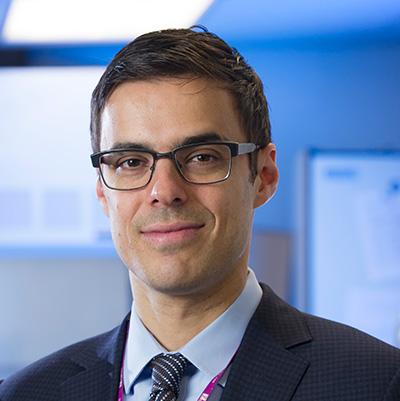
“Structured, standardized care works best the earlier it is applied… How quickly you see a patient is a key part of how well we deliver care.”
— Dr. Aristotle Voineskos, Director of the Slaight Centre
The Centre is led by an international advisory board that provides key direction on important research and solutions that can be implemented by service providers. Recently, the Centre was invited to share its knowledge on an international stage with youth service providers in London, U.K. “The more of us that get together to create a fuss, the better the chance that people will listen,” explained Dr. Ian Goodyer, a Child and Adolescent Psychiatrist at the University of Cambridge, U.K., and Chair of the Cundill International Advisory Panel. “We need to create the right context to advocate because there are pressure points that a group like us can influence.”
The inaugural Cundill Centre for Child and Youth Depression conference, held in November 2016 delivered new and exciting knowledge about child and youth mental health research and initiatives.

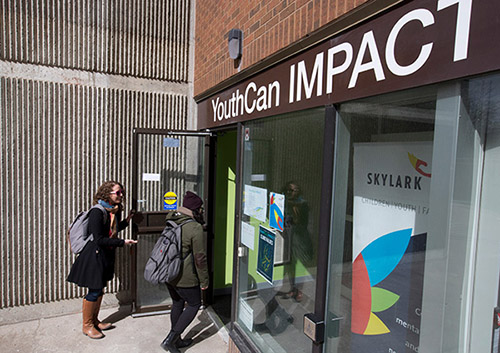
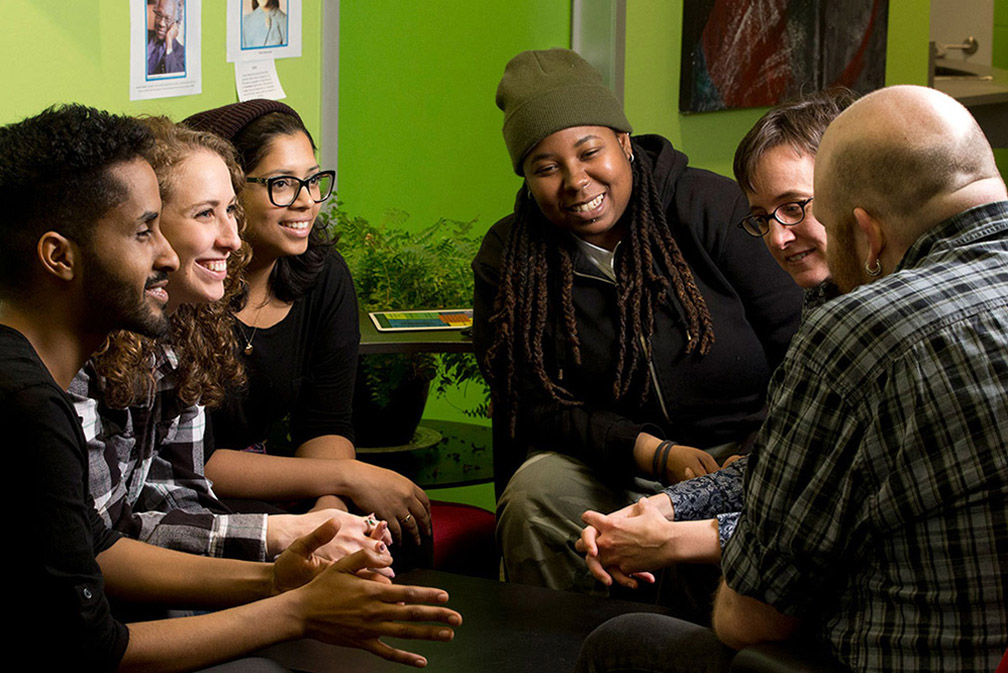
Youth meet with clinic staff at a YouthCan IMPACT clinic, Skylark location.
Disruptive behaviour in childhood contributes to problems with the child’s social, emotional, family and academic functioning. The Child Youth and Emerging Adult Program at CAMH offers evidence-based behavioural treatments for children with disruptive behaviour and their parents.
They have been called the “Lost Boys” of the Y Generation — adolescent males who become socially isolated, often over-consuming video games and cannabis. Hear how parents and caregivers can engage with this group of young men.
The Ontario Student Drug Use and Health Survey (OSDUHS) is one of the longest-running school surveys in the world, internationally recognized for pioneering contributions to understanding and addressing substance use, mental health, physical health, and risk behaviours among adolescents in grades 7 to 12.