|
 Centre for Addiction Centre for Addictionand Mental Health Please note: This is the very old CAMH website from 2012, made available for legacy purposes. |
|
|
|
Media and Events
|
Ryerson-CAMH Collaborative for Client-Centred CareThe staff at the Centre for Addiction and Mental Health (CAMH) know, perhaps more than most, how critical a role client-centred and family-sensitive care practices are in the improvement of both client outcomes and provider satisfaction, and they’ve seen this approach benefit the quality of care in other health care sectors. Today, thanks to an innovative new collaborative and the support of CAMH Foundation, CAMH has the opportunity to significantly advance client-centred and family-sensitive care in the field of mental illness and addictions.
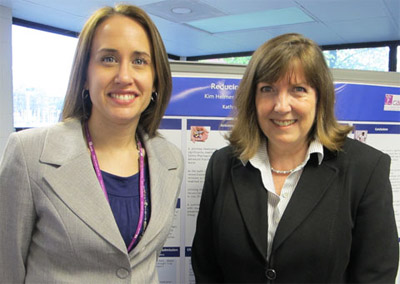
CAMH has partnered with Ryerson University to create the Ryerson-CAMH Collaborative for Client-Centred Care. This Collaboration between the Faculty of Community Services at Ryerson and the Professional Practice Office at CAMH was made possible through the generous support of Andrew and Valerie Pringle; his $200,000 pledge to CAMH Foundation has been designated to establish this crucial and timely Collaborative. "We are big supporters of both Ryerson and CAMH and it is great to see them working together to create a better model of care,” said Mr. Pringle. “I feel strongly that this Collaborative has the potential to realize CAMH’s vision of being a leader in client-centred and family-sensitive care in mental illness and addictions and we are honoured to be a part of that.” The Collaborative will provide the opportunity to generate the evidence needed to advance client-centred and family-sensitive interprofessional education and practice specific to mental health and addictions. One of the first steps in the process of building this Collaborative initiative was the recruitment last fall of the Director of Practice Research and Innovation, Dr. Kristin Cleverley, a nursing researcher and educator. Kristin’s impressive professional and educational background serves as a valuable addition to the initiative; she brings an array of experience and knowledge to the Director role. Most recently Kristin held a four-year joint CIHR/ Public Health Agency of Canada Fellowship while completing her PhD in Health Research Methodology at McMaster University. In addition to co-leading the client-centred care research she will also provide leadership for the Professional Practice Office in aligning infrastructure and building capacity for practice-based research across CAMH. As Co-Directors of the Collaborative, Kristin and Dr. Elizabeth McCay, Research Chair in Urban Health at Ryerson University, will link research activities with clinical care to ensure best practices in interprofessional collaboration are effectively implemented. Interprofessional practice (IPP) or care (IPC) has been recognized as the cornerstone of effective client-centered care. As such, the overall focus of this Collaborative will seek to enhance care through the development and dissemination of new knowledge pertaining to client-centered and family-sensitive practice through interdisciplinary perspectives. To-date the Collaborative has also successfully engaged two CAMH programs—Dual Diagnosis Program and the Mood and Anxiety Program— in a study to examine the extent to which interprofessional collaboration and team effectiveness contribute to team members perceived capacity to provide client-centered care for individuals receiving care in these programs at CAMH. The proposal has recently received ethics approval and data collection is underway in the Clinical Programs. Looking forward, the Collaborative will be assembling an interprofessional team of clinicians, educators, researchers, students and community stakeholders to foster even greater capacity to improve the lives of individuals and families living with mental illness and addictions. Kristin expressed the importance of this partnership between CAMH and Ryerson. “It is through collaborations such as this that truly innovative work can be done. Dr. McCay and I are excited to have this opportunity to focus on the advancement of Client-Centered and Family-Sensitive Care in mental health and addictions,” says Kristin. |
 |

|
Last updated: May 17, 2012 12:19 PM Published: May 17, 2012 6:05 PM ID#P64801 |